Are you working on something interesting, share your story with us!
In today’s fast-paced business world, companies need more than just traditional accounting software. They need tools that streamline financial processes, reduce waste, and provide real-time insights. Ramp, a financial technology (fintech) company founded in 2019, has quickly emerged as a leader in corporate spend management and finance automation.
Unlike traditional expense management tools, Ramp focuses on helping businesses spend less by combining corporate cards, expense tracking, bill payments, and automation in one powerful platform. With its focus on efficiency and savings, Ramp is reshaping how modern companies approach financial management.
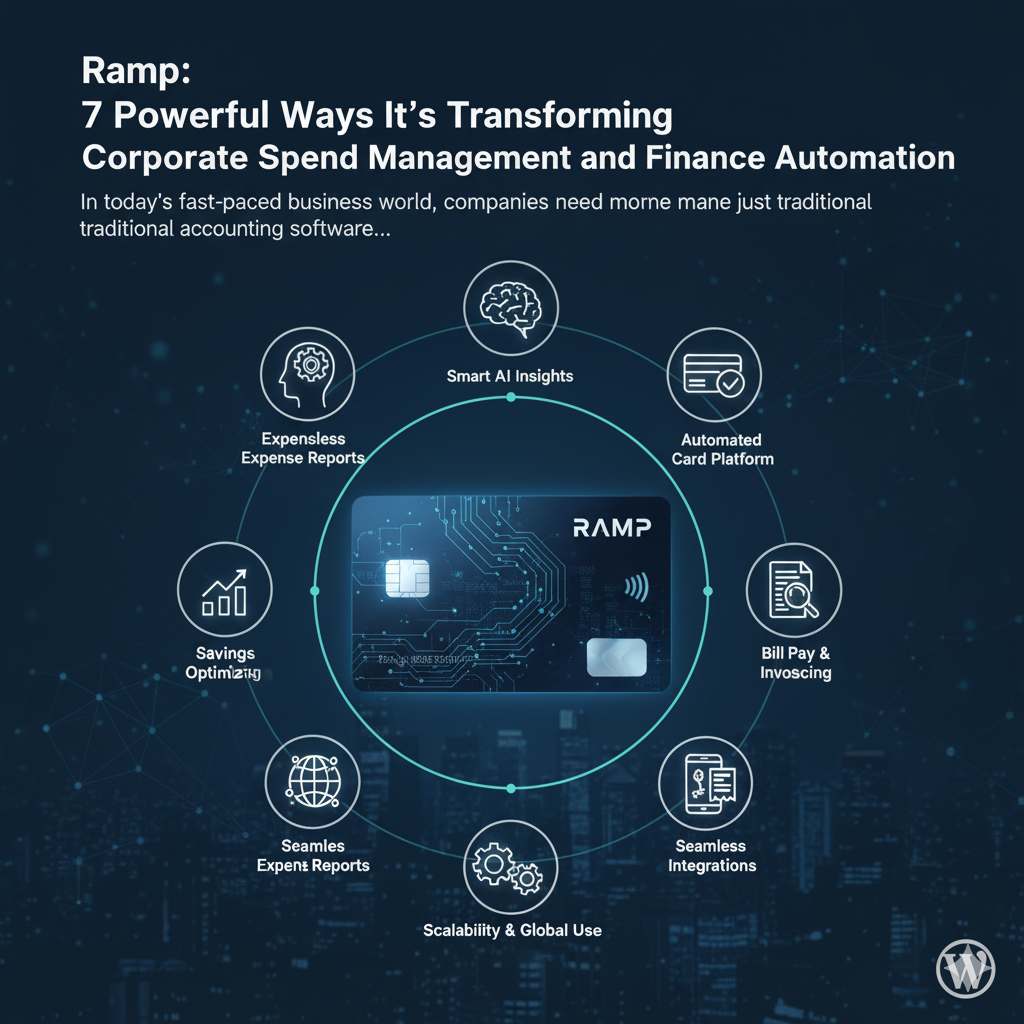
In this article, we’ll explore 7 powerful ways Ramp is transforming corporate spend management and finance automation—and why it has become one of the most disruptive players in fintech.
1. Smart Corporate Cards with Real-Time Insights
At the heart of Ramp’s platform are its smart corporate cards, which come with built-in controls and real-time visibility. Unlike traditional credit cards that provide spending data only at the end of the month, Ramp allows finance teams to track every expense as it happens.
Some key features include:
- Customizable limits: Companies can set spending caps by department, team, or even individual employees.
- Automated receipts: Employees simply upload a photo of their receipt, and Ramp automatically matches it to the right transaction.
- Real-time alerts: Finance teams receive instant notifications of unusual or unauthorized spending.
This level of control reduces waste, prevents overspending, and helps businesses align financial activity with company goals.
2. Automated Expense Management
Manual expense reporting is one of the most frustrating tasks for employees and finance teams alike. Ramp eliminates this pain point through end-to-end automation.
With Ramp, expenses are automatically categorized, receipts are matched, and reports are generated without human intervention. This saves hours of administrative work every month and ensures compliance with company policies.
Employees no longer have to spend valuable time filling out expense reports, while finance teams gain accurate, up-to-date records with minimal effort.
3. Bill Payments Made Simple
Ramp isn’t just about corporate cards—it also streamlines accounts payable and bill payments. Businesses can pay vendors directly through Ramp, using ACH transfers, checks, or cards, all from one centralized platform.
Features include:
- Automatic invoice scanning: Ramp extracts key details from uploaded invoices.
- Approval workflows: Bills go through customizable approval processes before payment.
- Faster payments: Vendors get paid on time, improving relationships and avoiding late fees.
By consolidating payments into one platform, companies reduce errors, improve transparency, and accelerate the financial close process.
4. Savings Insights and Spend Optimization
What sets Ramp apart from other fintech tools is its focus on savings. Ramp automatically analyzes company spending and identifies areas where costs can be reduced.
For example:
- Detecting duplicate software subscriptions.
- Highlighting underused SaaS tools.
- Suggesting cheaper alternatives for common business expenses.
According to Ramp, businesses save an average of 3.5% per year using its optimization tools. In industries with tight margins, these insights can make a major difference to the bottom line.
5. Seamless Integrations with Accounting Systems
One of the biggest challenges finance teams face is ensuring that financial data flows smoothly into their accounting software. Ramp solves this with robust integrations into platforms like QuickBooks, Xero, NetSuite, and Sage.
Benefits of these integrations include:
- Automatic syncing of transactions and receipts.
- Accurate categorization of expenses based on accounting rules.
- Faster month-end close with fewer reconciliation issues.
This eliminates the need for manual data entry and ensures financial records are always up to date.
6. Empowering Finance Teams with Analytics
Ramp provides powerful dashboards and analytics tools that give CFOs and finance teams full visibility into company spending.
Key capabilities include:
- Department-level spending breakdowns.
- Vendor-level reports for negotiation opportunities.
- Custom dashboards tailored to leadership needs.
Instead of looking backward at what was spent, Ramp empowers businesses to take a proactive approach, using real-time insights to guide strategic decisions.
7. Scaling with Businesses of All Sizes
Ramp is not just for startups—it’s designed to scale with companies as they grow. From small businesses to large enterprises, Ramp offers flexible tools that adapt to evolving needs.
Examples include:
- Startups using Ramp to issue cards to a few employees with strict budget controls.
- Mid-sized companies relying on Ramp for automated expense reporting and bill payments.
- Large enterprises using Ramp’s analytics to optimize multimillion-dollar budgets.
This scalability ensures that businesses don’t need to switch financial platforms as they expand, making Ramp a long-term partner in growth.
The Future of Ramp
Ramp’s long-term vision goes beyond spend management. The company aims to become a complete financial automation platform, handling not just expenses and payments, but also forecasting, budgeting, and strategic financial planning.
With billions in transaction volume and a growing customer base, Ramp is well on its way to becoming a cornerstone of modern business finance. As companies continue to embrace automation and efficiency, Ramp’s role in shaping the future of corporate finance will only expand.
Conclusion
Ramp has transformed the way businesses handle corporate spending by combining smart cards, automated expense management, bill payments, savings insights, and powerful analytics into one platform.
By focusing on efficiency and cost reduction, Ramp stands apart from traditional financial tools that simply track spending. Instead, Ramp helps businesses spend smarter, save more, and grow faster.
As the fintech industry evolves, Ramp’s innovations will continue to empower finance teams, making it one of the most important players in the future of corporate finance.